Partners
UGOT
University of Gothenburg


The University of Gothenburg (UGOT), through its Department of Conservation, specializes in integrated conservation of the built environment and heritage planning. This approach manages change in historic places through respect for cultural significance, place qualities, and circular strategies such as adaptive reuse. UGOT educates students and professionals to understand heritage as a dynamic resource, where tangible structures and intangible meanings shape identity, belonging, and sustainability. Methods like DIVE analysis and the Historic Urban Landscape (HUL) approach support context-sensitive, participatory planning. Cultural Ecosystem Services (CES) are central to this perspective as a link between culture and nature, connecting people’s memories, values, and everyday interactions with place. UGOT’s work aims to align conservation with broader ecological and spatial planning goals, promoting long-term, people-centered transformation.
UNIROMA3
Roma Tre University
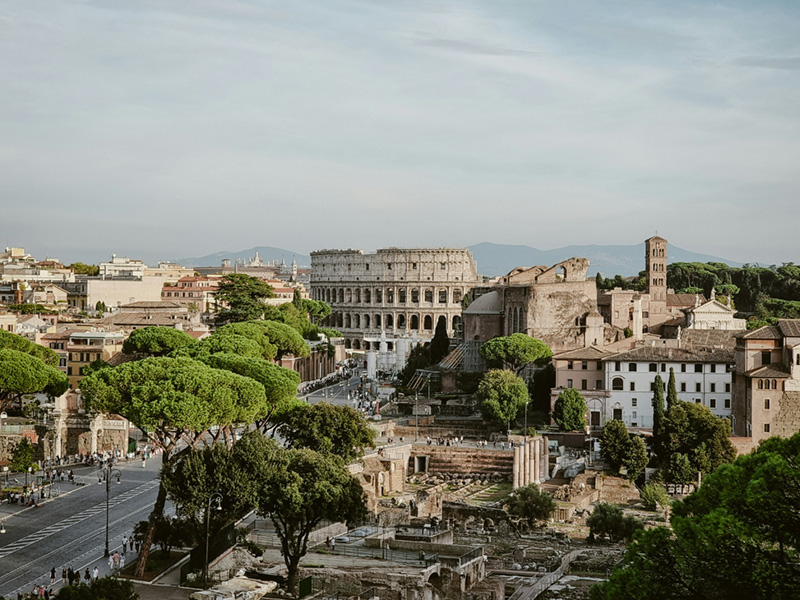

Roma Tre University (UNIROMA3) has been active since 1992 and serves as a key academic institution at both local and national levels, with nearly 35,000 students. Its 13 Departments offer around 70 degree courses, 22 PhDs, and 80 postgraduate programs. Roma Tre has played a significant role in the urban development of Rome by transforming abandoned industrial sites into hubs of knowledge and research, reshaping the city’s landscape. The Department of Architecture, located in the former slaughterhouse and future “City of Arts”, is a founding member of UNISCAPE (European Network of Universities for the European Landscape Convention) and a member of INU (Italian National Urban Planning Institute). The Department specializes in architectural design, urban planning, landscape studies, and heritage conservation, with a strong focus on urban regeneration processes and collaborative governance. It emphasizes the revitalization of built heritage, the integration of cultural landscapes into contemporary contexts, and sustainable environmental practices.
HGU
Hochschule Geisenheim University
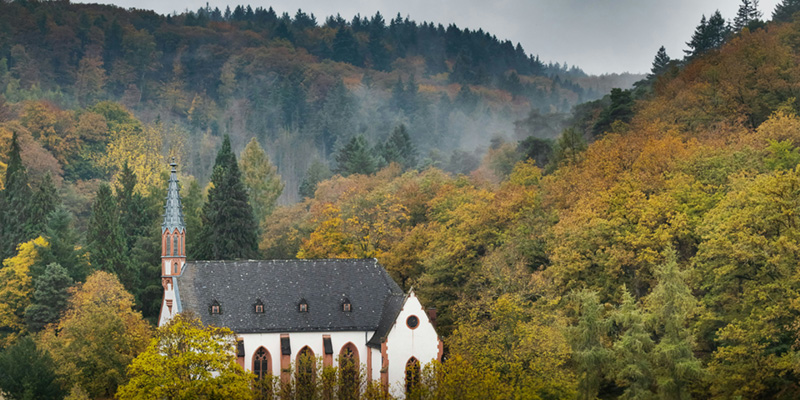
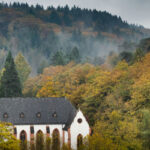
Hochschule Geisenheim University (HGU) is a public higher education institution in Germany, located in the Rhine Valley, about 50 km from Frankfurt am Main. HGU combines research with application-oriented teaching in the fields of wine and beverages, food, horticulture and landscape architecture. Two departments participate in PlaCES:
- The Department of Open Space Development provides students with the skills to design sustainable urban spaces and landscapes. Research is concerned with the diverse demands placed on public spaces, the relationship between design and use and the contribution of landscape architecture to sustainable urban development.
- The Department of Landscape Planning and Nature Conservation works on the scientific and methodological foundations of nature conservation and sustainable landscape management. This concerns the instruments of landscape planning, impact assessment and mitigation, the safeguarding of protected areas, including adaption to climate change. The Department hosts the KULT, the Competence Centre Cultural Landscape, a national and international cooperation network, which focuses on ecological and social challenges of sustainable, participatory development of cultural landscapes.
ENGEES
National University of applied Science in the field of Water and Environmental Engineering
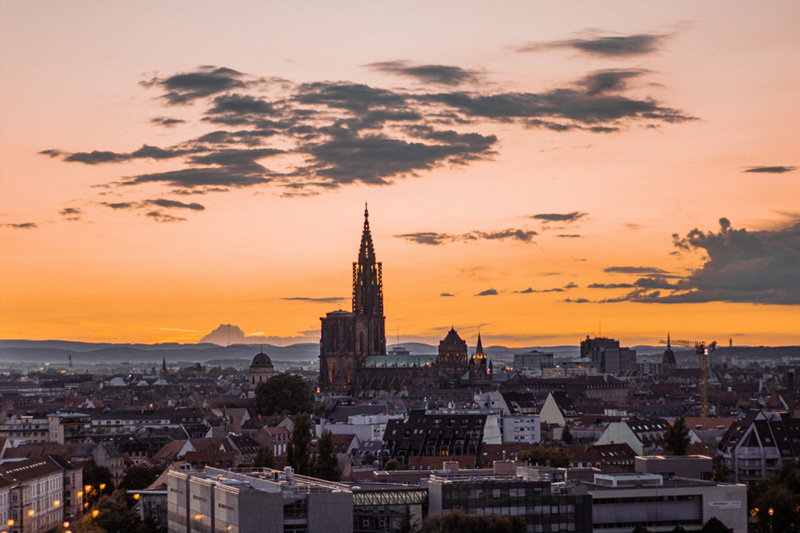

ENGEES, the National University of applied Science in the field of Water and Environmental Engineering of Strasbourg, is a prestigious French grande école founded in 1952. It specializes in training engineers and experts in the fields of water management, environmental protection, and urban infrastructure. Located in the heart of Strasbourg, the school offers a unique educational environment that combines academic excellence with practical, real-world experience.
The ENGEES is closely affiliated with major research institutions such as CNRS, INRAE, and the University of Strasbourg, and it supports four active research laboratories. Students benefit from a strong emphasis on hands-on learning, completing a minimum of nine months of internships during their studies. Aware of the challenges inherent to the protection of the environment and water resources, its courses fully reflect the objectives of sustainable development. ENGEES courses are taught by its professors and researchers who are members of 4 joint research units and by more than 200 outside professionals and experts. Thanks to its 60 years of experience and close relations established with professionals, ENGEES provides a tailored response to the needs of companies and local authorities, through its engineering programme with student or apprentice status, its specialised master’s degrees and its wide range of continuing education courses.
TU Dortmund
Technical University


TU Dortmund is a Technical University (Technische Universität). It is characterised by a broad disciplinary spectrum, integrating natural sciences, engineering, and social and cultural sciences under the motto: “Reason through Diversity”. The university was The faculty’s scope extends beyond traditional urban planning. It integrates social sciences, economics, environmental sciences, engineering, and law to address spatial problems at various levels: local (urban design), regional, national, and European/international. It focuses on shaping human living environments (Raumgestaltung) and balancing competing demands (e.g., development vs. conservation, mobility vs. health). The faculty is highly structured, typically encompassing around 15 to 20 different chairs/departments, which reflects its broad scope. These include Urban and Regional Planning, European Planning Cultures, Urban Design and Land Use Planning, Transport Planning, Environmental Planning, Socio Economics of Spatial Planning and Landscape founded in 1968 as the University of Dortmund. It was renamed TU Dortmund University in 2007. TU Dortmund is considered a medium-sized German university with 32,000 students and 17 faculties. It is a core member of the University Alliance Ruhr (UA Ruhr), a close strategic partnership with the Ruhr Universität Bochum and the University of Duisburg Essen, pooling resources and research strength across the region. The Faculty of Spatial Planning at TU Dortmund is the largest and oldest independent
academic planning department in Germany. It is unique in Germany for being a separate, comprehensive faculty focused entirely on spatial planning, rather than being merged into architecture or Planning. The Chair of Landscape Planning is 2025 newly founded and joined PlaCES Consortium.